



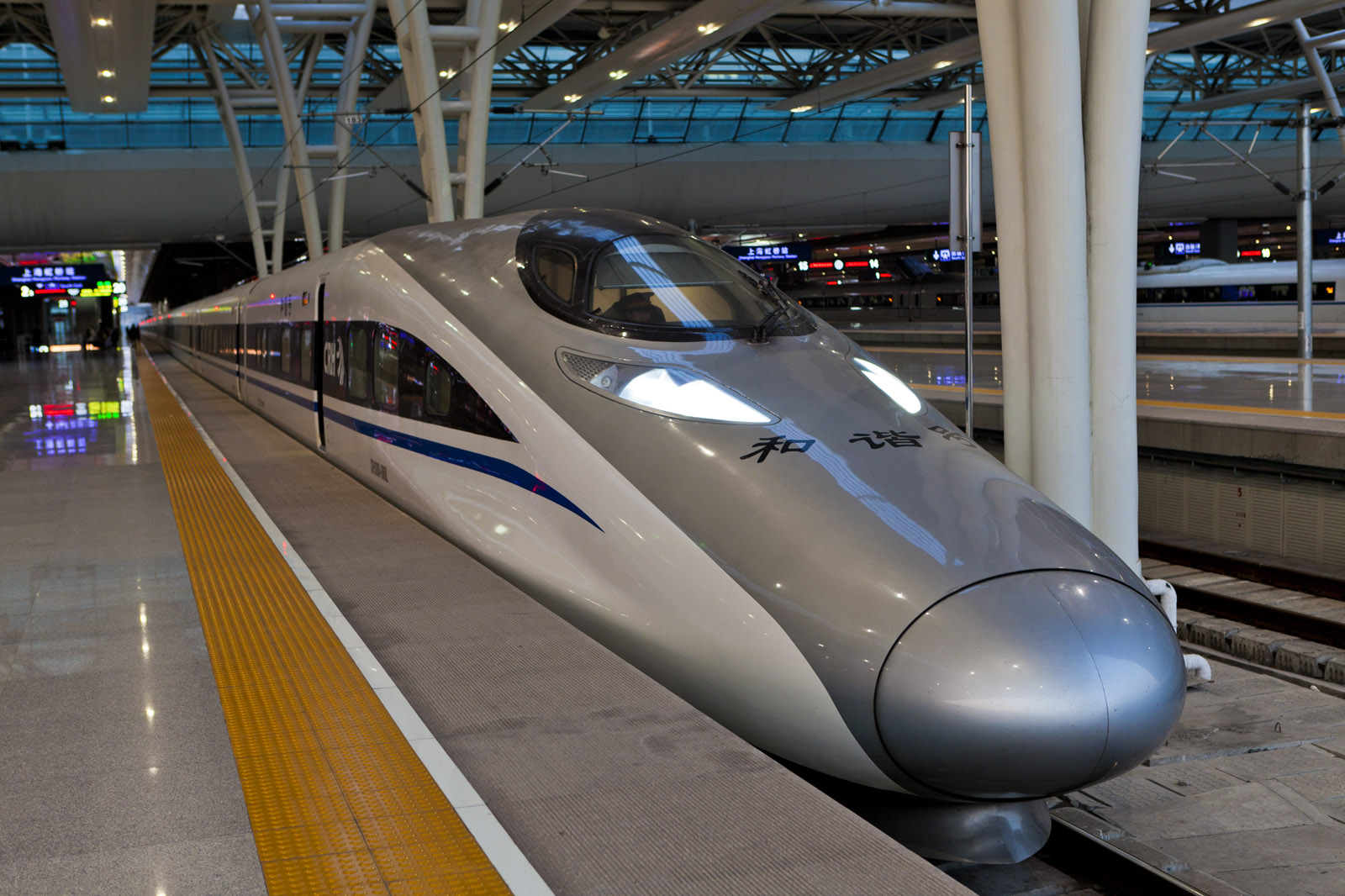
While India’s first bullet train project has been delayed due to land acquisition in Maharashtra, China can now boast of 37,900 kilometers of High Speed Rail [HSR] – more than 1/3rd of India’s entire rail network.
High-speed rail is an important indicator of the modernization of a country’s transportation and a significant reflection of its level of industrialization.
China has made historic progress in developing high speed rails which serves many purposes from connecting different parts of the country to keeping pace with the competition, and to leading the world.
At the beginning of the 21st century, China had no high-speed railways.
Slow and often uncomfortable trains moved across this vast country, with low average speeds making journeys such as Shanghai-Beijing a test of travel endurance.
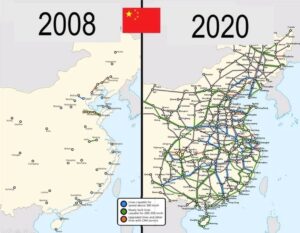
Today, it’s a completely different picture. The world’s most populous nation has become the world’s largest network of high-speed railways.
No fewer than 37,900 kilometres of lines criss-cross the country, linking all of its major mega-city clusters, and all have been completed since 2008. Half of that total has been completed in the last five years alone, with a further 3,700 kilometres due to open in the coming months of 2021.
The network is expected to double in length again, to 70,000 kilometres, by 2035. By 2020, 75% of Chinese cities with a population of 500,000 or more had a high-speed rail ink.
Boosting country’s economic power –
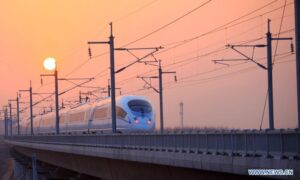
China’s ambition is to make high-speed rail as the mode of choice for domestic long-distance travel, but these new railways have a much greater significance .They are a symbol of the country’s economic power, rapid modernization, growing technological prowess and increasing prosperity.
Equipped with modern technology –
Not satisfied with pushing the boundaries of speed, endurance and civil engineering, Chinese companies are among the first in the world to introduce new technology such as autonomous (driverless) train operation and advanced signalling and control technology.
The driverless “bullet trains” connecting Beijing and Zhangjiakou in northern Hebei province are capable of hitting speeds up to 350 kph, making them the world’s fastest autonomous trains.
What lies ahead ?
China is expanding into neighbouring countries as well with $5.3 billion Laos-China Railway due to open by the end of 2021. Although it is not a high-speed railway, the new 257-mile line is a significant extension of Chinese railway influence, providing improved links from southern China to the Laotian capital Vientiane. Construction of a railway to Bangkok in Thailand and eventually south to Singapore is also in progress.
CRRC is already the world’s largest supplier of railway vehicles and technology but as its home market grows, it has its eyes firmly on global exports worth billions of dollars every year.
Indian scenario

India’s first Bullet Train project was announced in 2015 to connect Mumbai to Ahmedabad. However, the work has been largely stalled in Maharashtra. After coming to power, Maharashtra Chief Minister Shri Uddhav Thackeray said that the project would be reviewed. Subsequently, in a July 2020 interview with Saamna, he surmised that the project will not go ahead much like the Nanar refinery project, stated his preference for auto-rickshaws over bullet trains and also pitched for changing the train’s route from Mumbai to Nagpur. On the other hand, the Railways Ministry has begun work on several other bullet train projects including some connecting New Delhi to the Eastern cities and some in the South of India.